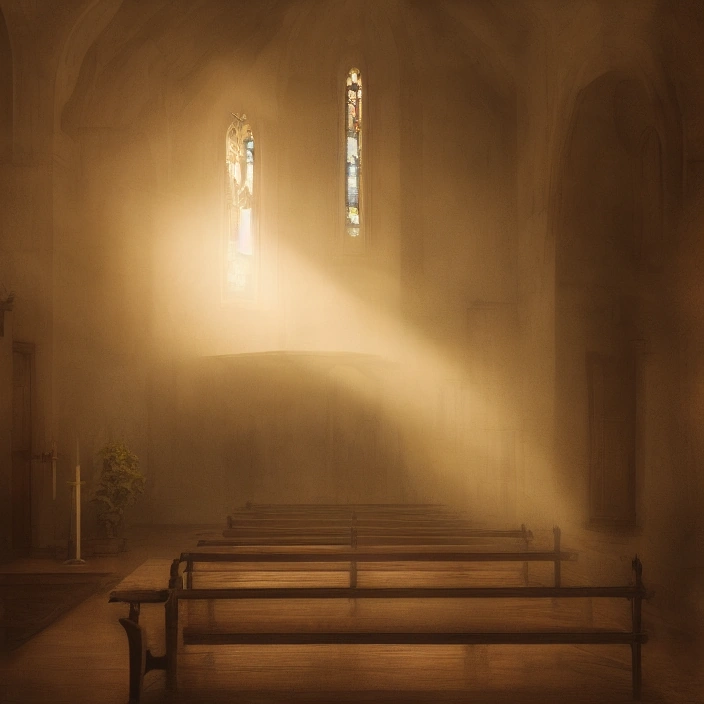
Quiet church interior in warm morning light before a service

How to Discern Spiritual Gifts Without Turning Faith Into Performance

One of the more subtle dangers in Christian life is that even good things can be taken up in the wrong spirit. Spiritual gifts are one of those good things. Scripture treats them as real graces, given by the Holy Spirit for the good of the church. Yet the moment gifts are detached from humility, they become spiritually confusing. What was meant to build up the body begins to feed comparison, self-importance, anxiety, and display. The question is no longer simply whether a gift is present. The deeper question is whether it is being discerned and carried under the rule of love.

This matters because many believers do not struggle with unbelief about gifts. They struggle with distortion. Some fear that any attention to spiritual gifts will lead to spiritual vanity. Others seek gifts with such intensity that they begin to measure their worth by visible usefulness. Still others quietly envy the gifts of other people and grow resentful of the ordinary shape of their own obedience. In Day 7: Seven Swans A-Swimming – The Gifts of the Spirit, VineyardMaker has already treated gifts as signs of grace rather than private possession. That truth needs to be pressed further. Gifts are safest when they remain ordered to love, wisdom, and hidden faithfulness.

Gifts Are Given, Not Owned

The language of Scripture is important here. Paul does not speak of gifts as trophies of spiritual maturity. He speaks of them as gifts. That alone should sober us. A gift is received. It is not manufactured, controlled, or wielded as proof of superior standing. The Spirit apportions to each as He wills. That means no Christian can boast in a gift as though it originated in the self. Whatever is truly given by the Spirit is already a reason for gratitude before it is ever a reason for visibility.

This is why discernment must begin with reverence. The question is not, what would make me significant? The question is, what has God entrusted, and for whose good? Once that order is reversed, gifts become dangerous. We begin to turn grace into identity, and identity into performance. The result is often a divided life: outward usefulness, inward unrest. In that sense, the warning of Christ about losing the soul remains relevant even here. What good is it for us to gain the whole world but lose our souls? applies not only to worldly ambition, but also to religious ambition when spiritual usefulness becomes a substitute for communion with God.

A gift does not make a person important. It makes a person responsible. That is a much more demanding truth. It means gifts must be offered back to God in the spirit in which they were given: with humility, dependence, and fear of misuse.

Love Is the First Test of a Spiritual Gift

Paul’s great correction in 1 Corinthians is not that gifts are unreal, but that gifts without love become spiritually disordered. The church at Corinth did not lack manifestations. It lacked proportion. It had become impressed with what was striking and inattentive to what was holy. This is why chapter 13 stands where it does. Love is not an interruption to the discussion of gifts. It is the decisive measure of whether gifts are being used rightly at all.

That is still the measure now. If what we call discernment makes us harsher, more theatrical, more impatient, or more eager to be seen, then something has gone wrong. A genuine gift should deepen charity, not diminish it. It should make a person more ready to serve, not more ready to dominate. It should enlarge obedience, not self-consciousness. In this sense, the Beatitudes remain essential to any theology of gifts. Day 8: Eight Maids A-Milking – The Beatitudes reminds us that the kingdom is borne by the poor in spirit, the meek, the merciful, and the pure in heart. If gifts are present without that inward posture, they are not being carried safely.

Love also rescues us from comparison. Many believers become anxious because their gifts do not resemble the gifts most admired by their circle. But the Spirit was never obligated to arrange the church according to our appetite for visibility. The question is not whether my gift attracts attention. It is whether I am offering what has been given in a way that strengthens the life of others.

Wisdom Protects Gifts from Becoming Spectacle

One reason gifts become distorted is that people attempt to discern them without wisdom. They want certainty without maturity, influence without tested character, and usefulness without patient formation. But wisdom teaches proportion. It teaches timing. It teaches restraint. This is one reason Proverbs 8: A Practical Theology for Daily Life belongs near any serious reflection on gifts. Wisdom keeps a person from assuming that every impression deserves expression, that every ability deserves immediate platform, or that every stirring of zeal has already become obedience.

Wisdom also teaches that hiddenness is not a sign of uselessness. Some of the most necessary gifts in the church are quiet ones: the gift of steady mercy, patient counsel, faithful prayer, prudent judgment, truthful encouragement, and durable service. These do not always appear dramatic, but they preserve communities from collapse. A culture trained by spectacle will overlook such graces. Scripture does not. The body of Christ is not held together by whichever gifts can most easily be performed in public. It is held together by the Spirit’s wise distribution of grace across the whole life of the church.

This should free believers from two equal mistakes. The first is to despise gifts because they can be abused. The second is to chase gifts in ways that imitate the world’s hunger for prominence. Both errors forget that wisdom is concerned not only with what is possible, but with what is fitting under God.

Gifts Become Clearer in the Context of Obedience

Many Christians want to discern their gifts in the abstract. They ask what they are called to do before they have settled into the simpler work of becoming faithful where they already are. But gifts usually become clearer in motion, not in endless self-analysis. They become clearer through service, through correction, through community, through prayer, and through repeated obedience in ordinary places. A person often discovers what God has entrusted by offering himself to the church without demanding a grand role in advance.

This is why the inner life cannot be separated from the discernment of gifts. If prayer is neglected, repentance delayed, and truthfulness treated lightly, then even a real gift can become unstable in the hands of the person who bears it. The soul must be kept if the gift is to be kept clean. In How to Keep Your Soul in a World That Rewards Everything Else, VineyardMaker has already argued that the soul is usually lost quietly through wrong measures and divided desires. That same insight applies here. Gifts become corrupt not only through false doctrine, but through inward disorder left unattended.

The opposite is also true. A hidden life with God steadies discernment. It makes a person less eager to manufacture spiritual identity and more willing to receive correction. It trains the heart to prefer fruitfulness over recognition. In that environment, gifts can be named more truthfully and offered more safely.

The Best Use of a Gift Is the Building Up of Another

The final test of a gift is not whether it makes the bearer seem impressive. It is whether another person is strengthened in faith, truth, hope, repentance, or love because it was offered faithfully. Spiritual gifts are given for edification. That means the proper atmosphere for them is not self-display but service. A gift reaches its healthiest form when the person using it is no longer preoccupied with himself.

This should quiet both pride and fear. Pride is quieted because the gift is not ours to glorify. Fear is quieted because we are not required to become extraordinary in our own power. We are only asked to be faithful with what has been entrusted. That faithfulness may look dramatic at times, but more often it looks like patient, repeatable obedience. It looks like speaking when truth is needed, remaining silent when vanity is tempting, serving when nobody will notice, and preferring the health of the body over the enlargement of the self.

So how does a Christian discern spiritual gifts without turning faith into performance? He begins by refusing to ask the wrong question. Not, what would make me appear gifted? But, what has God given, and how can it be offered in love? Once that question governs the soul, the pressure begins to ease. Gifts remain gifts. The self is no longer the center. And the church, rather than the ego, becomes the place where discernment finds its proper end.

How to Keep Your Soul in a World That Rewards Everything Else

Most people do not wake one morning and decide to lose their souls. The loss is usually quieter than that. It happens in small accommodations, in habits of noise, in the steady preference for what can be measured over what must be guarded. A person can remain outwardly respectable, productive, even admired, while becoming inwardly hollow. This is why Christ’s question remains so severe and so merciful at once: what does it profit a man to gain the whole world and forfeit his soul?

That question does not belong only to the visibly ambitious. It belongs to ordinary believers as well. We can lose the soul not only through public success but through private dispersion. We become too hurried to pray, too reactive to listen, too dependent on approval to tell the truth, too restless to endure hidden obedience. In What good is it for us to gain the whole world but lose our souls?, VineyardMaker has already reflected on the gravity of Christ’s warning. But the warning must be carried further. If the soul can be lost quietly, then it must also be kept quietly, through habits that seem small in the eyes of the world and decisive in the sight of God.

The Soul Is Formed by What It Repeatedly Loves

Scripture does not treat the soul as a vague religious ornament. It is the seat of desire, worship, memory, and orientation before God. A soul does not remain neutral. It is shaped by what it repeatedly attends to, what it fears, what it seeks, and what it consents to. This is why the Psalms speak so often in the language of thirst, refuge, and waiting. The soul becomes like the object it leans upon.

The modern world trains people to live almost entirely at the surface of themselves. Attention is fragmented. Worth is quantified. Urgency becomes a permanent climate. Under such conditions, even sincere Christians can begin to imagine that inward life is optional, as though prayer, examination, reverence, and silence were secondary to visible competence. But the soul cannot survive on efficiency. It survives by truth, by worship, by repentance, and by a steadier love than the market of public opinion can give.

This is why Romans 12 speaks not first of strategy but of transformation. The believer is told not to be conformed to this world, but to be renewed in mind. That renewal is not cosmetic. It is a reordering of perception itself. To keep the soul, then, is not merely to avoid scandal. It is to resist being inwardly catechized by a world that rewards speed, vanity, and self-display.

Worldliness Is Often More Ordinary Than We Admit

When Christians hear the word worldliness, they often imagine obvious moral collapse. Scripture is subtler. Worldliness can appear anywhere the soul begins to measure life by standards that exclude God. A person may remain doctrinally serious and still become worldly in spirit. He may value visibility over faithfulness, cleverness over wisdom, platform over prayer, and influence over holiness.

This is one reason the soul must be guarded in ordinary life. Not every corruption arrives through open rebellion. Much of it arrives through imitation. We begin to speak the language of outcomes and branding so fluently that we no longer notice what has been displaced. Even spiritual gifts can be misunderstood in this way. In Day 7: Seven Swans A-Swimming – The Gifts of the Spirit, the emphasis is on gifts as graces entrusted by God, not decorations for the self. The moment a gift becomes severed from love, humility, and obedience, it begins to deform the soul that carries it.

Worldliness, then, is not merely having too much. It is receiving one’s measure from the wrong kingdom. Christ’s warning about gaining the world is severe because the world offers compensation quickly. It pays in applause, distraction, stimulation, and the illusion of mastery. The soul, by contrast, is kept through slower means. It is kept where there is no spectacle: in truthfulness, in hidden prayer, in reverence, in mercy, in the refusal to become a divided self.

Wisdom Keeps the Soul from Being Spent on Trivial Things

One of the clearest gifts God gives for the keeping of the soul is wisdom. Not cleverness, not information, not spiritual novelty, but wisdom: the capacity to love what is truly worth loving and to order life accordingly. Proverbs does not offer wisdom as an intellectual achievement. It offers wisdom as a way of walking. That is why Proverbs 8: A Practical Theology for Daily Life remains so important for VineyardMaker’s direction. Wisdom stands at the crossroads because most people do not lose themselves in one final disaster. They lose themselves through many smaller choices made without holy seriousness.

To keep the soul, a believer must learn again to ask older questions than the culture permits. Is this good? Is this true? Does this deepen charity? Does this strengthen attention to God? Does this make me more patient, more whole, more able to remain in reality without fleeing into performance? Those are not glamorous questions, but they are wise ones. A soul is often preserved less by a dramatic breakthrough than by repeated refusals to squander itself on what does not endure.

Wisdom also teaches proportion. Not every opportunity deserves consent. Not every demand deserves urgency. Not every inner impulse deserves trust. The soul is kept when desire is instructed, not merely indulged. It is kept when life is arranged around what is weighty rather than what is loud.

The Soul Is Kept in Hidden Practices Before It Is Tested in Public

Christ’s teaching in the Beatitudes is essential here because it reveals what the guarded soul actually looks like. It is poor in spirit, meek, merciful, pure in heart, hungry for righteousness. In Day 8: Eight Maids A-Milking – The Beatitudes, the point is not sentimental virtue but the shape of a life that can bear the kingdom. The soul is not kept by self-protection alone. It is kept by becoming the kind of person who can receive God without resistance.

That formation happens mostly in secret. The prayer nobody sees. The repentance offered without drama. The decision to tell the truth when a lie would be easier. The choice to remain quiet long enough for vanity to lose some of its power. This is also why seasons of dryness should not be wasted. In Why Prayer Feels Dry Even When Faith Remains, the difficult grace of staying in prayer without immediate consolation was already named. Hidden fidelity in those seasons is not peripheral to the keeping of the soul. It is one of the ways the soul is actually strengthened.

Public crises reveal what private habits have formed. If the inner life is neglected for long enough, the soul becomes brittle. It may still perform well, but it cannot endure pressure without splintering. By contrast, hidden practices create interior substance. They make room for courage because they have already made room for God.

Keeping the Soul Requires Losing Certain Rewards

There is no way to keep the soul without disappointing some of the world’s expectations. A guarded soul will sometimes look unambitious, slow, or unimpressed. It will refuse opportunities that demand too much compromise. It will choose presence over constant availability, truth over image, and prayer over the frantic need to remain significant. In that sense, some worldly rewards really must be lost if the soul is to remain alive.

This is not an argument for withdrawal from responsibility. It is an argument for right order. We still work, build, teach, serve, decide, and endure. But we do so without handing the center of the self over to lesser masters. The soul belongs to God before it belongs to any task. Once that order is reversed, even good labor becomes corrosive.

So how is the soul kept? Not by panic, and not by spiritual theatrics. It is kept by turning again toward what is real: the word of God, the fear of the Lord, prayer that remains even when it feels plain, wisdom that refuses triviality, and obedience that accepts hiddenness. The world will continue to reward many things that cannot save. The Christian’s task is not to despise the world as creation, but to refuse its false measures. A soul is not preserved by gaining more. It is preserved by remaining under the rule of what is eternal.

And that means the question of Christ must remain near us, not as a threat shouted from afar, but as a form of mercy close at hand. What shall it profit us to gain what cannot last and lose what was meant for God? The soul is kept when that question is allowed to order our days before the losses become obvious.

Open Bible in warm morning light inside a quiet room

Why Prayer Feels Dry Even When Faith Remains

Many Christians expect prayer to become difficult when life becomes openly sinful, distracted, or rebellious. What unsettles them more is another experience altogether: prayer remains regular, faith remains sincere, yet the heart feels little warmth in the act itself. Words are said. Psalms are read. Silence is kept. But the inward sense of nearness seems thin. It is possible to remain present before God and still feel, in a painful way, that prayer has become dry.

This dryness often troubles believers because it appears to call the whole spiritual life into question. If prayer is difficult, perhaps faith has weakened. If there is no sweetness, perhaps God is displeased. If the soul feels empty, perhaps one has somehow failed. Yet Scripture is much more patient than our suspicions. It does not speak as though every faithful prayer is emotionally vivid. It speaks of thirst, waiting, groaning, persevering, and hoping in the dark.

That matters because prayer is not sustained by consolation alone. It is sustained by truth, covenant, and desire for God, even when that desire feels wounded. The believer who continues to pray through dryness is not necessarily backsliding. He may, in fact, be learning a deeper form of fidelity than the one he knew when prayer came easily.

Dryness Is Not the Same Thing as Unbelief

Psalm 42 gives language for this distinction. The psalmist thirsts for God while also asking why his soul is cast down. Longing and sorrow coexist. The absence of relief is not proof that faith has vanished. It is often proof that faith is still alive enough to grieve the felt distance. A dead soul does not mourn the loss of communion. It hardly notices it. But a living soul feels the poverty of its own condition and cries out because God still matters.

This is one reason spiritual dryness should not be interpreted too quickly. Some seasons reveal negligence and need repentance. Others reveal the painful honesty of a heart that has stopped confusing religious activity with communion. The person who notices dryness may actually be awakening to the seriousness of prayer. He is no longer content with words that pass through the mouth untouched by the deeper life.

VineyardMaker has already reflected in the Beatitudes that poverty of spirit is not a decorative virtue. It is the beginning of truth before God. Dry prayer can become one of the places where that poverty is admitted. We arrive without pretense. We cannot manufacture devotion on demand. We can only bring our need and remain there.

God Sometimes Withdraws Consolation Without Withdrawing Mercy

Believers often assume that if God is kind, He will keep prayer emotionally reassuring. But the history of Christian spirituality has never taught that. Augustine, Bernard, and the desert tradition all knew that God may deny felt sweetness for a time without ceasing to give grace. Consolation is a gift, but it is not the foundation of the spiritual life. God Himself is the foundation. When consolations recede, the soul is confronted with a harder question: do I want the gifts of prayer, or do I want God?

That question should not be asked harshly. A tired Christian does not need accusation. He needs clarity. There are seasons in which the Lord trains His people by removing the supports they have leaned on too heavily. Not because He delights in deprivation, but because He wants love to become steadier than sensation. In Proverbs 3: trusting God in every step, the issue is not merely decision-making. It is the deeper refusal to lean upon our own understanding, including our understanding of what prayer should feel like.

To say this carefully: a dry season is not automatically advanced spirituality. It may expose sin, exhaustion, grief, or distraction. But neither is it automatically abandonment. The God of Psalm 63 is sought in a dry and weary land. The land is dry, and the prayer rises from within that dryness. The condition itself does not prevent communion. It becomes part of the prayer.

Prayer Is More Than What You Can Feel in the Moment

One of the most merciful texts for dry seasons is Romans 8, where Paul says that we do not know how to pray as we ought, and the Spirit helps us in our weakness. That is not only for moments of crisis. It is also for long periods when prayer feels partial, distracted, halting, and poor. The Spirit’s work is not suspended because our experience is unimpressive. Divine help does not wait for spiritual fluency.

This should correct a modern habit of measuring prayer almost entirely by immediate interior response. If the moment feels alive, we count it as prayer. If it feels blank, we suspect failure. Scripture gives a humbler account. Prayer includes petition, silence, waiting, lament, repentance, and even wordless longing. It is not invalidated by weakness. In many cases, weakness is where true prayer begins, because then we stop performing and begin asking for mercy.

That is why the slow wisdom reflected in House of Wisdom and Wisdom at the Crossroad matters here. God often forms people through ordinary persistence rather than dramatic breakthroughs. A person can kneel with little sense of achievement and yet be more truthful before God than when prayer felt full of self-satisfaction. Dryness can strip prayer down to its bare intention: I have come because You are God, and I need You even when I cannot feel You rightly.

How to Remain in Prayer When It Feels Empty

Christ’s teaching in Matthew 6 is simple and unspectacular: go into your room, shut the door, and pray to your Father who sees in secret. The command does not depend on emotional reward. The hiddenness is part of the discipline. Dryness is often made worse when we keep demanding a result from prayer that prayer was never designed to guarantee on command. The aim is not to produce an experience. It is to turn toward God with reverence and perseverance.

So remain with simple forms. Pray the Psalms when your own words feel thin. Keep a short rule rather than a heroic one. Confess sin plainly where needed. Give thanks even if gratitude feels small. Ask for desire when desire is weak. And resist the urge to abandon prayer until it becomes satisfying again. Luke 18 does not present perseverance as glamorous. It presents it as necessary.

It also helps to remember that dryness can be intensified by creaturely causes. Fatigue, anxiety, overwork, and private grief all affect the inner life. A believer is not made more spiritual by ignoring his limits. Sometimes fidelity means rest, honesty, or conversation with a wise pastor. The apostles themselves were not strangers to frailty, which is one reason the apostles remain useful companions. God forms real people, not disembodied ideals.

The Quiet Faithfulness of a Dry Season

The deepest danger in dry prayer is not that God has gone elsewhere. It is that we begin to think prayer is worthwhile only when it rewards us quickly. But love matures by remaining. A marriage cannot live on first delight alone. Neither can the life of prayer. There comes a point when the soul is invited to seek God because He is worthy, not because the hour felt luminous.

If prayer feels dry while faith remains, do not despise that season too quickly. Bring the dryness itself into God’s presence. Name it without exaggeration. Ask for mercy without demanding immediate relief. And continue. The Father who sees in secret is not absent from the room simply because the room feels silent. Often the most hidden prayers are the ones in which faith becomes cleanest, because there is less left to hold onto except God Himself.

When Prayer Feels Empty: Staying Before God in Silence

There are seasons when prayer feels like speaking into a quiet room. The words are still there. The need is still there. But the warmth is gone, and what once felt alive now feels thin. Many believers carry this privately, as if dryness were a sign of failure.

Scripture does not treat it that way. The Psalms give us language for exactly this kind of prayer: “How long, O Lord?” (Psalm 13:1). That cry is not rebellion. It is relationship under strain. The psalmist does not leave God because God feels far. He speaks to Him from within the distance.

When God Feels Silent

We often expect God to come with immediacy, clarity, and strong feeling. Sometimes He does. But in 1 Kings 19, Elijah meets the Lord not in spectacle but in a low whisper. The lesson is not that God is always quiet. The lesson is that His presence is not measured by intensity.

In difficult seasons, we confuse consolation with communion. We think that if we do not feel God, we have lost God. Yet the saints have long warned us against that conclusion. Augustine writes as a man acquainted with desire and delay: the heart is enlarged by waiting. What feels like emptiness can become a deeper capacity for love.

How to Stay

When prayer is hard, simpler is better. Keep a small rule and keep it gently: a fixed time, a fixed place, one psalm, one honest sentence before God. Do not perform. Do not force emotion. Stay present.

Jesus in Gethsemane shows us this endurance. He does not hide anguish, and He does not dramatize it. He remains before the Father: “Not my will, but yours, be done” (Luke 22:42). In dry prayer, faith is often this plain. Not brilliance. Not ecstasy. Fidelity.

What Silence Can Form

If prayer feels empty, do not assume God has stepped away. The cross teaches us that divine love can be most active where it is least felt. In hidden seasons, God often purifies what we seek from Him and teaches us to seek Him for Himself.

So keep watch. Return tomorrow. Bring God your distracted mind, your tired heart, your unfinished trust. He is not offended by small prayers. He receives them, and over time He makes them deep.

Proverbs 10: The Power of Our Words and Choices

The book of Proverbs is filled with timeless wisdom, offering guidance for every area of life. Proverbs 10, in particular, stands out as a collection of contrasting images—the righteous and the wicked, diligence and laziness, wisdom and foolishness. These verses may seem like simple moral lessons, but they hold profound truths that apply to our everyday struggles as Christians.

The Power of Our Words

One of the most striking themes in Proverbs 10 is the weight our words carry. Proverbs 10:19 reminds us, “When words are many, transgression is not lacking, but whoever restrains his lips is prudent.” How often do we regret something we’ve said in haste? In a world of social media and instant communication, it’s easy to react instead of reflect. But wisdom calls us to pause. To listen. To speak only when our words build up rather than tear down.

Many of us have felt the sting of words spoken against us. Maybe you’ve been misunderstood, criticized unfairly, or even gossiped about in Christian circles. If so, take heart—Proverbs 10:11 declares, “The mouth of the righteous is a fountain of life.” Your words, when rooted in love and truth, have the power to bring healing. Instead of focusing on what has been spoken against you, focus on how you can use your own words to bring life to those around you.

Work and Provision: God’s Invitation to Faithfulness

In Proverbs 10:4, we read, “A slack hand causes poverty, but the hand of the diligent makes rich.” This verse isn’t just about financial wealth; it speaks to the fruitfulness that comes from steady faithfulness in all areas of life. Diligence in our work, our relationships, and our spiritual walk leads to abundance—not necessarily in material riches, but in the deep satisfaction of a life well-lived.

Many Christians wrestle with feeling unseen in their efforts. Maybe you’re a stay-at-home parent, an overworked employee, or a church volunteer wondering if what you do even matters. Proverbs reassures us that God sees. He honors faithfulness, even when no one else does. The work of our hands, when done with integrity, is an offering to Him.

Trusting in God’s Security, Not Ours

Proverbs 10:25 provides a comforting truth: “When the whirlwind passes, the wicked is no more, but the righteous has an everlasting foundation.” Life is unpredictable. Tragedy, loss, and disappointment come when we least expect them. But those who build their lives on God’s truth will stand firm. This doesn’t mean we won’t face storms, but it does mean that our foundation will hold.

If you’ve been feeling uncertain—whether in your career, relationships, or faith—Proverbs 10 reminds us that security doesn’t come from earthly stability. It comes from trusting in the unshakable foundation of God’s righteousness.

Reflection Questions

  1. How can you use your words this week to bring life instead of harm?
  2. In what areas of your life do you need to be more diligent and faithful?
  3. Are there places where you’ve been seeking security outside of God? How can you shift your trust back to Him?

May Proverbs 10 be a reminder that God sees you, your words matter, your work has purpose, and your security is found in Him.