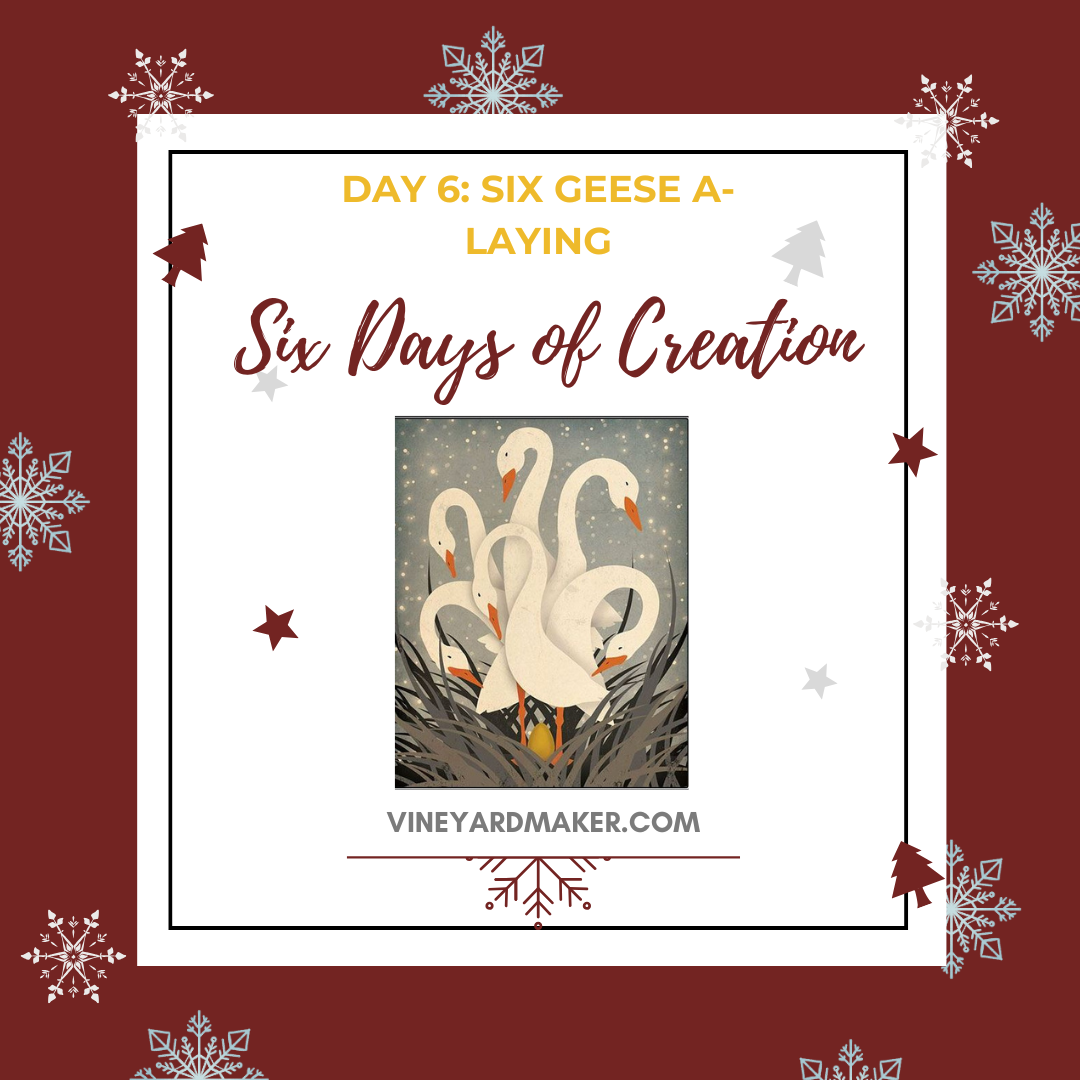
Six geese a-laying are usually explained in Christian symbolism as a reminder of the six days of creation. That is a devotional reading of a Christmas song image, not a Bible verse that gives geese one fixed spiritual meaning.
That distinction matters. A symbol can help a Christian remember Scripture, but it should not be treated as if it has the same authority as Scripture. The useful question is not, “What secret code do the geese unlock?” but, “Does this image point me back to the Creator with more gratitude and care?”

The Short Answer: Creation, Not A Hidden Code
In many Christian explanations of The Twelve Days of Christmas, six geese a-laying are connected with the six days in which God creates in Genesis 1. The laying image can suggest life, fruitfulness, and created things continuing to multiply, so it works as a simple memory hook.
Still, the Bible does not say that geese mean creation. Genesis speaks about God creating light, sky, land, plants, lights, creatures, and humanity. The song image is later and devotional. It may be useful, but it should stay in its proper place.
Start With Genesis Before The Song
A careful reading starts with Genesis 1, where creation is ordered across six days. The passage is not mainly about decoding seasonal images. It names God as Creator and shows the created world as ordered, dependent, and good.
That is why the six-days association can be spiritually helpful. It reminds the reader that Christian wonder begins with God, not with the symbol itself. The geese are not the point. The created world, and the God who gives it life, are the point.
For a nearby VineyardMaker theme, the site also reflects on God’s creation as gift and calling. Exodus also looks back to the creation week when it speaks about Sabbath: “in six days the Lord made the heavens and the earth.” Read Exodus 20:8-11 for that connection. This keeps the symbolism anchored in a real biblical theme rather than in free-floating speculation.
How The Image Can Help Without Taking Over
Six geese a-laying can serve as a small teaching image. A parent might use the phrase during Advent to ask a child what God made. A Bible study leader might mention it briefly while talking about creation, Sabbath, and gratitude. A reader might use it as a seasonal prompt to notice created life instead of rushing past it.
The better use is modest. Let the image carry attention for a moment, then move back to Scripture, prayer, and ordinary gratitude. A weak use makes the bird image feel mysterious and important on its own. A better use lets it become a doorway back to the Creator.
A Careful Symbol Reading Table
Use this table when a Christian symbol sounds biblical but may come from later tradition. It helps keep the reading useful without overstating it.
| Question | Careful Answer | Better Wording |
|---|---|---|
| Does the Bible define six geese? | No. Scripture does not assign geese this meaning. | Christians often use the image as a reminder of creation. |
| What biblical theme is nearby? | The six days of creation in Genesis 1. | The number six can point readers back to the creation week. |
| What should the symbol produce? | Gratitude, worship, and attention to Scripture. | Let the image send you back to God as Creator. |
A Worked Example For Advent Reading
Suppose a family is reading one line of The Twelve Days of Christmas each evening in December. When they reach six geese a-laying, the parent could say, “Some Christians use this line to remember the six days of creation. Let’s read part of Genesis 1 and name one created thing we are grateful for today.”
That is enough. The practice does not need a long theory about geese. It turns a familiar lyric into a short act of attention: read Scripture, name a gift, thank God, and avoid claiming more than the tradition can carry.
The same pattern works for personal reflection. Write one sentence: “Today I receive creation as gift when I notice _____.” Then choose one ordinary act of care: water a plant, step outside without your phone for five minutes, prepare food with gratitude, or rest from the need to make everything productive.
Where Readers Often Overreach
The most common overreach is saying, “The Bible says six geese mean creation.” That sounds stronger than the evidence allows. A more truthful sentence is, “Later Christian symbolism often connects six geese a-laying with the six days of creation.” The difference is small in wording but large in honesty.
Another overreach is treating every seasonal image as a hidden message. Christian imagination can be generous, but it should also be disciplined. If a symbol helps you love Scripture, receive creation, and worship God more clearly, it is serving well. If it distracts from Scripture or encourages secret-code certainty, slow down.
What To Do With The Symbol Today
Use six geese a-laying as a gentle prompt, not a doctrinal proof. Read Genesis 1. Notice that creation is received before it is managed. Thank God for one ordinary created gift. Then let the symbol become small again.
That is the healthiest Christian use of this kind of symbolism. It does not need to win an argument or uncover a secret. It simply helps the reader move from a familiar Christmas phrase toward Scripture-shaped gratitude.